
Kenny Yu 俞堃
What to expect in a physiotherapy session
Your Initial Consultation: What to Expect
A Dedicated One-on-One Experience
When you step into the clinic, you will experience a unique approach to healthcare: a thorough, uninterrupted, one-on-one consultation entirely dedicated to you.
We don't rush the process. Our first session is an intentional evaluation that looks at the big picture. We will dive deep into your current symptoms, your health history, past injuries, and the potential root causes of your discomfort. By taking the time to map out how these pieces connect, we can design a comprehensive treatment plan that targets the true source of your problem, not just the surface pain.
Understanding the Recovery Window
It is important to understand how your body responds to targeted physical therapy. After your initial treatment session, you may experience some temporary fatigue or localized muscle soreness.
This response can last anywhere from 24 to 48 hours, and it is a completely normal reaction. Because we are stimulating deep tissue changes, releasing restrictions, and shifting old movement patterns, this temporary soreness is simply a sign that your body is adapting, resetting, and beginning the long-term healing process.
Modalities We Use
Depending on your unique assessment and individual goals, your treatment plan will be customized using a variety of evidence-informed techniques.
Here are examples of the specialized physiotherapy methods you may experience during a session:

Manual Therapy
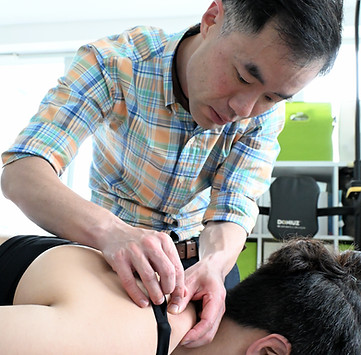
Manual therapy is about the clinical application of targeted, hands-on techniques to modulate pain and restore joint and soft-tissue mobility. By reducing inflammation, inducing deep muscle relaxation, and accelerating tissue repair, we can directly facilitate better movement and improve overall function. The power of a skilled physical touch yields profound clinical results that simply cannot be replicated by medication or passive treatments.

Exercise & Movement Therapy
True rehabilitation means finding the right answer to fix the underlying problem, rather than just masking the symptom. Movement therapy is entirely customized to your specific lifestyle demands: a weak muscle must be strategically strengthened; a tight tissue structure must be released; a long-distance runner needs to build structural endurance; an office worker needs focused postural awareness; and a child needs to develop better balance. We train your body to move correctly for your specific world.

Clinical Pilates
utilizing a specialized DMA model , this approach goes far beyond basic core training. We focus intensely on analyzing your unique movement patterns to facilitate optimal muscle coordination and maximize the effectiveness of how your body works. By using specialized Pilates equipment, your body receives instant external feedback, allowing you to modify your movement strategies in real time and learn how to use your body in a smarter, more efficient way.
Western Acupuncture & Dry Needling
Also known as dry needling, this technique acts as a bridge between structural science and neural stimulation. While it supports blood flow and meridian stimulation similarly to traditional practices, it serves as a highly powerful mechanical tool to release deep, stubborn muscle knots that manual therapy alone sometimes cannot reach. By stimulating the nervous system and tapping into the body’s natural "pain-gate theory," needling provides rapid, effective pain down-regulation.

Fascial Mobilisation Therapy (FMT)
(Originally developed as the Modern Cupping Method)
The fascia system is a massive, interconnected network that is often the hidden culprit behind chronic joint and muscle pain. Through FMT, we utilize localized negative pressure (decompression) to lift the skin and underlying tissue. This significantly boosts blood circulation and lymphatic flow, desensitizes hypersensitive pain pathways, and—most importantly—releases stubborn restrictions between the skin and muscle layers.
For Physio interested to know more about Fascial Moblisation please visit my Website.

Sports Taping
Taping is a highly effective tool for immediate joint support and injury prevention. By applying specialized elastic tape, we enhance your joint position sense (proprioception), helping you become more aware of how your body is moving. Mechanically, the tape microscopically lifts the skin, which increases the space between the skin and muscle layers to reduce localized pressure, ease pain, and improve regional circulation during activity.
Taping can be done for joint support and prevention of injury. It could enhance the joint sense to improve the awareness of one's position. Modern elastic tape can also lifts the skin to increase the space between skin and muscle to reduces localized pressure and improve circulation over the region.